

Personal loans are one of the most versatile financial tools available in the United States, unlike auto loans or mortgages, which are designed for specific purchases—a personal loan can be used for a wide range of financial needs.
However, flexibility does not mean simplicity. Before borrowing, it’s important to understand how personal loans work, what they cost, and when they make sense.
This guide breaks down the fundamentals so you can make informed decisions.
Table of Contents
What Is a Personal Loan?
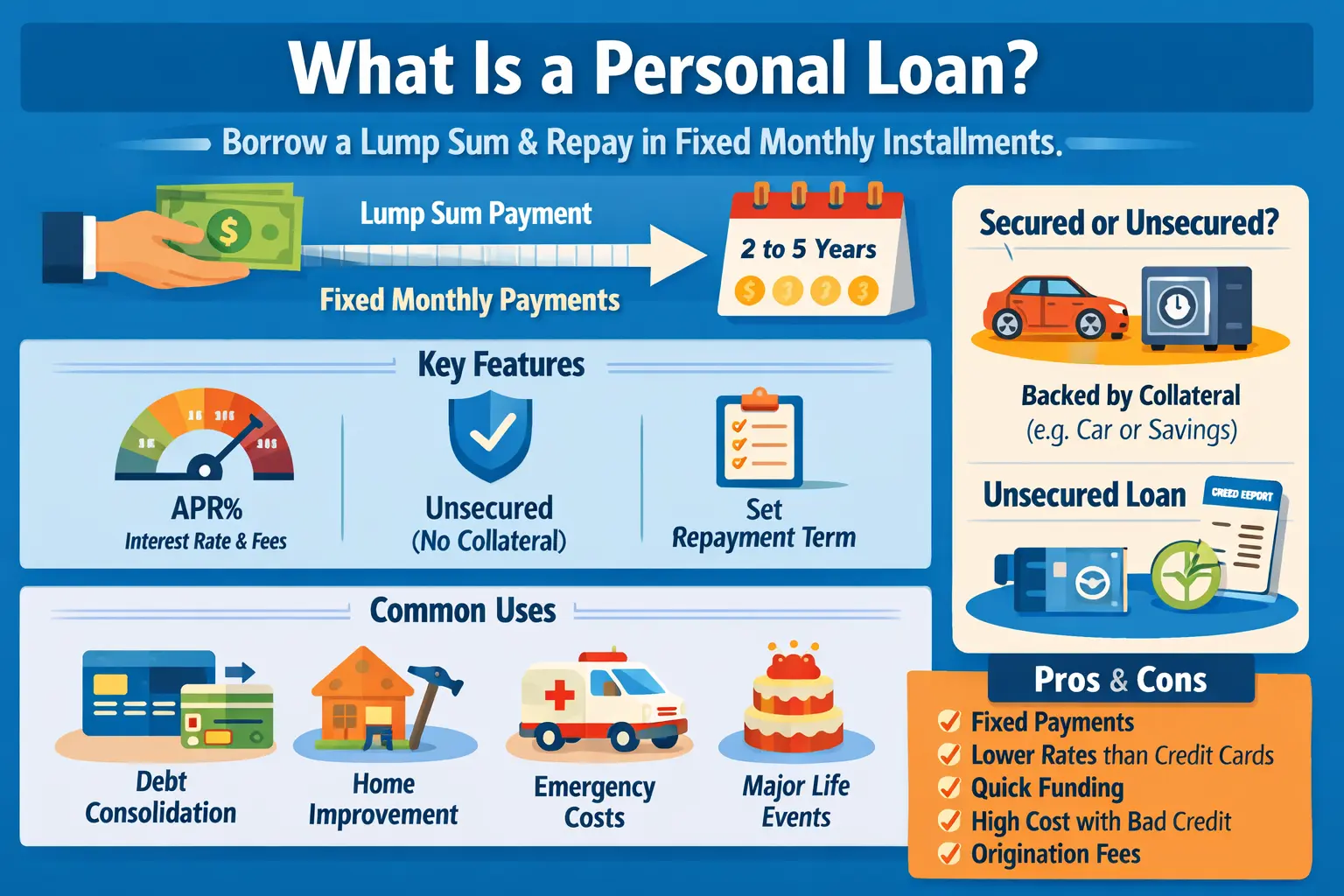
A personal loan is a type of installment loan that typically comes with:
- A fixed interest rate
- Fixed monthly payments
- A set repayment term (usually 2 to 7 years)
Most personal loans are unsecured, meaning they do not require collateral such as a house or car. Instead, approval is based primarily on your credit score, income, and overall financial profile.
When approved, you receive a lump sum of money upfront and repay it over time.
How do Personal Loans Work
Understanding the structure of a personal loan helps you calculate the real cost of borrowing.
The Installment Model
When you take out a personal loan:
- You receive the full loan amount upfront.
- You repay it in fixed monthly installments.
- Each payment includes both principal and interest.
Because payments are fixed, personal loans are considered predictable compared to credit cards, which have variable balances.
The Cost of Borrowing (APR Explained)
The cost of a personal loan is expressed as an APR (Annual Percentage Rate).
APR includes:
- The interest rate
- Certain lender fees (such as origination fees)
For example, a loan with a lower interest rate but high fees may actually cost more than a slightly higher-rate loan with no fees.
Always compare APR—not just interest rates—when evaluating offers.
Secured vs. Unsecured Personal Loans
Unsecured Loans (Most Common)
- No collateral required
- Approval based on credit score and income
- Higher rates if your credit profile is weak
These are the most widely available personal loans in the U.S.
Secured Loans
- Backed by an asset (such as a savings account, CD, or vehicle)
- Lower risk for the lender
- May offer lower interest rates
- Easier approval for borrowers with lower credit scores
Because they require collateral, secured loans carry the risk of losing your asset if you fail to repay.
Common Uses for Personal Loans
Personal loans are often used strategically rather than casually.
Debt Consolidation
One of the most common uses is consolidating high-interest credit card debt into a single loan with a lower interest rate.
Benefits may include:
- One monthly payment instead of multiple
- Potential interest savings
- A defined payoff timeline
However, consolidation only works if you avoid accumulating new credit card debt.
Home Improvements
Borrowers may use personal loans to fund repairs or upgrades that improve home value.
Unlike home equity loans, no home collateral is required.
Emergency Expenses
Unexpected medical bills, urgent car repairs, or sudden expenses can sometimes justify short-term borrowing.
Still, building an emergency fund is generally preferable long-term.
Major Life Events
Some people use personal loans for weddings, relocations, or other large planned expenses. These decisions should be weighed carefully, especially if repayment will strain your budget.
Key Terms You Should Know
Understanding these terms helps you compare loan offers more effectively.
Principal
The original amount of money borrowed.
Interest
The cost of borrowing money.
APR (Annual Percentage Rate)
The total yearly cost of the loan, including certain fees.
Origination Fee
A one-time processing fee charged by some lenders (typically 1%–8% of the loan amount).
Prepayment Penalty
A fee charged for paying off a loan early. Most modern reputable lenders do not charge this, but it’s important to confirm.
Pros and Cons of Personal Loans
Pros
- Fixed monthly payments (predictable budgeting)
- Often lower interest than credit cards
- Fast funding (sometimes within 24–48 hours)
- Clear repayment timeline
Cons
- Can be expensive with poor credit
- Adds a new monthly obligation
- May include origination fees
- Missed payments can hurt your credit score
How Personal Loans Affect Your Credit Score
Taking out a personal loan can affect your credit in several ways:
- A soft credit check (used to preview rates) does not impact your score.
- A hard credit inquiry (when formally applying) may temporarily lower your score slightly.
- Making on-time payments can strengthen your credit profile over time.
- Missing payments can significantly damage your score.
Responsible repayment is key.
Frequently Asked Questions(FAQs)
Checking rates through a soft inquiry does not affect your credit score. However, submitting a full application typically triggers a hard inquiry, which may cause a small temporary drop.
Funding timelines vary by lender. Many online lenders deposit funds within 1–5 business days after approval.
Final Thoughts
Personal loans can be useful for specific financial goals, such as consolidating high-interest debt or covering necessary expenses.
However, they should not be used for impulse spending or discretionary purchases that strain your budget.
Before borrowing, carefully review the APR, fees, and repayment terms to ensure the loan fits your financial situation.
Disclaimer
This article is for informational purposes only and does not constitute financial advice. Loan terms, interest rates, and approval criteria vary by lender. Always review official loan documents before making borrowing decisions.