Wall Street Sell-Off: S&P 500 Enters Correction as AI Trade Unwinds — Nasdaq Wipes Out 2026 Gains

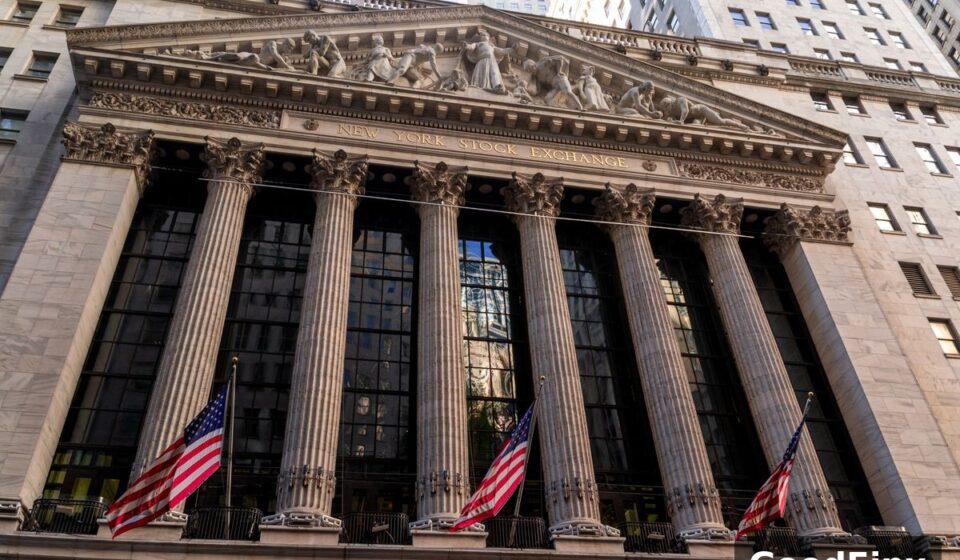
The Wall Street sell-off November 2026 gave Wall Street its worst day in a long time. The S&P 500 fell 3.7% and is now officially in a correction, down more than 10% from its record high in early October. The Nasdaq plunged 5.28% in a single day and has wiped out its 2026 gains.
The trigger was the AI trade — the same trade that carried the market higher for most of the year. Investors started doubting whether the huge spending on artificial intelligence can actually pay off, and they sold the biggest AI names first.
Table of Contents
Wall Street sell-off November 2026: the numbers
| Index | Friday’s move | Close | Where it stands |
|---|---|---|---|
| S&P 500 | -3.7% (-265.44 points) | 6,910.39 | More than 10% below its 6 October record — officially in correction |
| Nasdaq Composite | -5.28% (-1,261.47 points) | 22,617.73 | Negative for 2026; down nearly 18% since its 6 October all-time high |
| Nasdaq 100 | -5.6% | — | Worst week since March 2020 |
| Dow Jones | -1.93% (-949.73 points) | 48,147.33 | Down 8% on the week, worst week since March 2020 |
The Nasdaq’s 1,261-point drop was the second-largest one-day points drop in its history. The S&P 500 has now fallen seven days in a row — its longest losing streak since February 2020, right before the pandemic crash. The Dow has dropped more than 1% for five straight days.
The fear gauge told the same story. The VIX, Wall Street’s measure of expected volatility, surged 86% over the week and closed Friday at 35.89 — its highest level in 19 months.
Why it happened: the AI trade is unwinding
For most of 2026, the market’s story was simple: buy the companies building AI, and everything else follows. The chipmakers, the cloud providers, the software firms riding the AI wave — they pulled the indexes up with them.
That story cracked on Friday. The doubts are about financing. Building out AI takes staggering amounts of money — new data centres, new chips, new power capacity — and investors are now asking whether the companies doing the spending can earn it back.
The big losers
Nvidia led the fall. The chipmaker dropped 14% on Friday, its worst day in almost two years. It has now lost about a third of its value in two weeks, as investors assess Jensen Huang’s departure from the CEO post. Its losing streak is the longest since 2008.
AMD fell 13.3%. And Anthropic, the AI company that had just pulled off a record IPO, fell 8.5% on Friday — wiping out nearly all of its debut-day gains in a single session. When a stock that just had a record IPO gives back its gains within days, it tells you how fast the mood has turned.
What this means for regular investors — and your 401(k)
Here’s the part that actually matters to most people: if you have a 401(k) or an IRA, you probably felt Friday even if you never look at the market.
Say you’re 35, you put money into your 401(k) every payday, and most of it sits in a broad index fund that tracks the S&P 500. A 3.7% drop in one day means your balance fell by roughly 3.7% too — on a $100,000 balance, that’s about $3,700 gone in a day. It stings. And the Nasdaq being down nearly 18% from its October high means the growth funds in your plan have taken a much bigger hit.
But a correction is not a crash, and it’s not new. The S&P 500 has fallen 10% or more from a peak many times before, and every time so far it has recovered. What usually hurts investors most in moments like this isn’t the drop itself — it’s selling at the bottom and missing the recovery.
A few things worth keeping in mind:
- Your contribution limits didn’t change. For 2027, you can still put up to $25,500 into a 401(k), and the IRA limit stays at $7,500. Our guide to the 2027 401(k) and Roth IRA contribution limits has the full numbers.
- Regular contributions help in a falling market. When you buy every payday, a lower price means your money buys more shares. That’s the whole idea behind compound interest — time in the market, not timing it.
- Check your mix, not the news. If your 401(k) is mostly in one hot sector, Friday was a warning. A broad mix of stocks and bonds won’t stop losses, but it stops one bad week from doing this much damage.
The Asia response
The selling didn’t stop at the US border. Japan’s Nikkei fell 5.06%, and South Korea’s Kospi lost more than 5%. Governments in Asia moved fast over the weekend to steady their markets.
China is cutting the minimum margin requirement for stock buying from 100% to 80% on 30 November, a move that could unleash nearly 400 billion yuan — about $60 billion — into its market. Taiwan widened its curbs on short selling and is buying shares directly. South Korea announced a stock stabilisation fund.
What to watch next
Monday’s open. The first question is whether Friday was the end of the selling or the middle of it. A calmer Monday would suggest the worst of the panic is over. Another big down day would tell you investors are still heading for the exits.
The AI names. Nvidia, AMD and the rest of the AI trade will set the tone. If they stabilise, the broader market probably does too. If they keep falling, the indexes follow.
The Fed, 9 December. The next Federal Open Market Committee meeting is on 8–9 December, with the decision due on the 9th. Before Friday, futures were pricing a high chance of a 25-basis-point rate hike — not a cut. A sell-off like this can change that calculation, so watch whether the odds move.
The VIX. If the fear gauge stays above 30, expect more big swings in both directions.
Frequently asked questions
What does it mean that the S&P 500 is in a correction?
The Wall Street sell-off November 2026 pushed the S&P 500 more than 10% below its record high of 6 October 2026, so it officially qualifies as a correction. Corrections happen fairly often — roughly once a year on average — and they are different from a bear market, which is a 20% fall.
Why did the Nasdaq fall so much more than the Dow?
The Nasdaq is packed with technology and AI stocks, the exact names investors were selling on Friday. The Dow holds more old-economy companies — banks, industrials, healthcare — which fell less.
Should I sell my stocks after a day like Friday?
Selling after a big drop usually means locking in the loss and missing the recovery, which often comes in a handful of very strong days. If your investment plan still makes sense for your age and goals, the usual advice is to stay put and keep contributing. If you’re near retirement and the drop keeps you up at night, that’s a sign to review your allocation — with an adviser, not in a panic.
Sources: Charles Schwab market commentary; CNN markets; Investopedia 20 November markets news; Moneycontrol, “Asia’s stock rescue efforts gather pace after Wall Street plunge” (22 November 2026). Figures are as reported on Friday 20 November 2026. Market data changes fast — check current prices before making any investment decision. This article is for information only and is not investment advice.