

America’s emergency oil stockpile has fallen to its lowest level in two years, raising fresh questions about the country’s ability to absorb future supply shocks.
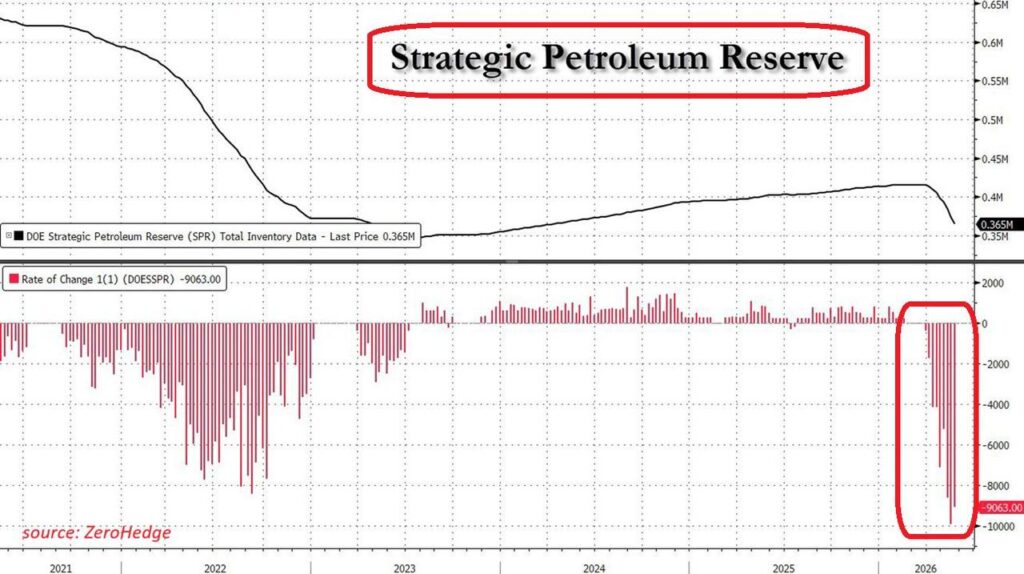
The US Strategic Petroleum Reserve (SPR) dropped to approximately 365 million barrels this week — a two-year low — after one of the fastest drawdown periods in the reserve’s history, according to data from the US Energy Information Administration (EIA).
The SPR shed roughly 9.1 million barrels in a single week, part of a broader month-long decline of nearly 33 million barrels. The releases are part of a coordinated effort by US policymakers to stabilise global oil markets amid ongoing geopolitical tensions and concerns over supply disruptions in the Middle East.
What the SPR is and why it matters
Established after the 1973 oil crisis, the Strategic Petroleum Reserve is the world’s largest emergency crude oil stockpile. The reserve stores hundreds of millions of barrels of crude in underground salt caverns along the Gulf Coast, designed to buffer the economy during supply shocks, geopolitical conflicts, or major natural disasters.
When reserve levels fall sharply, the US has less room to respond to future disruptions — a concern that becomes more acute when global supply risks remain elevated.
Why The Reserve Is Being Drained
Recent releases have been coordinated with international partners in an effort to reduce volatility in global energy markets and prevent severe supply shortages tied to Middle East tensions, including ongoing concerns about access to the Strait of Hormuz, a critical shipping corridor for global oil exports.
At the same time, US oil exports remain near record highs while distillate fuel inventories are hovering near historically low levels — a combination that has amplified concerns about energy market resilience heading into peak summer demand.
What It Means For Oil Prices And Inflation
A thinner emergency buffer can increase oil price volatility if global supplies tighten further. Rising energy costs ripple across the broader economy — affecting transportation, manufacturing, and everyday consumer prices — and could add inflationary pressure at a sensitive moment for monetary policy.
Investors are closely watching both weekly crude inventory reports from the EIA and any government signals about future SPR policy.
Can The Reserve Be Rebuilt?
Restoring the SPR to previous levels is possible but slow. Rebuilding typically takes years, depending on oil prices, production capacity, budget allocations, and overall market conditions. Analysts note that a full recovery would require a sustained strategy and stable supply — neither of which is guaranteed in the current environment.
Bottom Line
With the SPR at a two-year low and geopolitical risks still elevated, the reserve’s trajectory has become one of the more important indicators for oil markets in 2026. How policymakers manage the balance between short-term market stabilisation and long-term energy security will shape both crude prices and inflation expectations in the months ahead.
Disclaimer
GoodFinx is an independent news and information website. Articles are for informational purposes only and do not constitute professional financial, legal, or investment advice.